
On the first day of the international CO2LAB in Ghent, we (the Utrecht-based team) organized an experimental workshop on visions for the heat transition. Our objective was to connect research and practice across contexts and experiment with elements to help develop our tool for collective, inclusive visioning processes. That last part represents our role in the consortium: how to create visioning processes for alternative futures of vulnerable neighbourhoods in ways that connect to their communities’ needs?
The workshop
Drawing from our preliminary findings in Utrecht, we presented three “visioning conundrums”; pain points that emerged from analysing visioning documents in the city’s heat transition. They are:
1. The dominance of economic and technological narratives (over social and environmental narrative)
2. A weak use of allegory and storytelling 3. Gaps in participation Together, these conundrums present opportunities to move vision processes towards more collective and inclusive outcomes.
In the workshop we applied these conundrums to Ghent’s Watersportbaan (WSB). We had just been guided through this area by Lena Verlooy. Back in the building with the neighbourhood fresh in our minds, we split the room into three teams. Participants discussed WSB’s own vision document: the 8 ambitions for the neighborhood drafted by neighbourhood stakeholders. Would the conundrums resonate here?
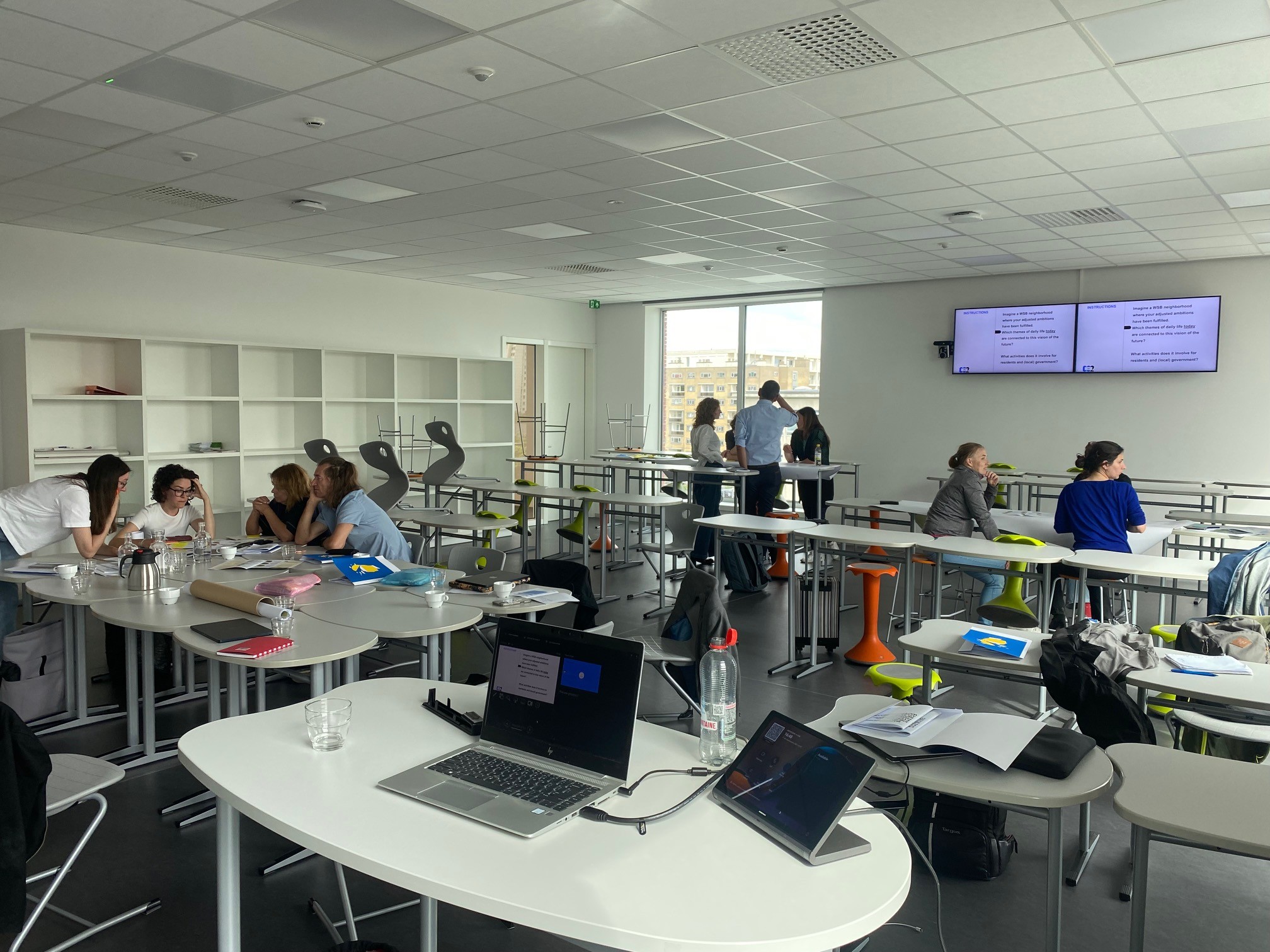
The first team considered the need for integrated visions, pointing out how large-scale renovations (such as those planned for WSB) were sometimes at odds with the needs of local residents. The second contrasted the grand story of the 1960s modernist project with the lack of exciting storytelling today. The third group talked about building trust with residents, many of whom had no time or energy for long-term visioning while they were unsure of their futures in the neighbourhood. Using backcasting, we imagined how the vision presented for Watersportbaan was reflected in the present. What kind of everyday activities would fulfil the ambitions? This exercise helped to shift the focus from abstract targets to present-day experiences.
“You can’t see it from outside, but inside the apartment blocks – the conditions are poor. It’s invisible. How we cared for the buildings says something about how we cared for the residents” – Evelyne Deceur (neighbourhood manager)

